|
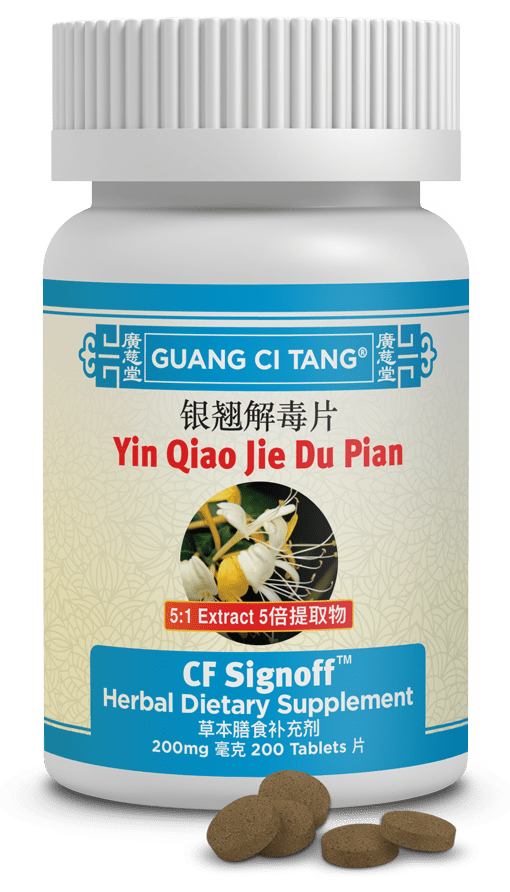
Cold SignoffTM (Yin Qiao Jie Du Pian) is the most common cold remedy
in Chinese medicine. It is what AirBorne® cold remedy is based on but is more potent
and much cheaper.
Cold SignoffTM is to be taken at the first sign of cold or for imminent cold prevention.
But it is not for use continuously.
For immune function boosting in the long run,
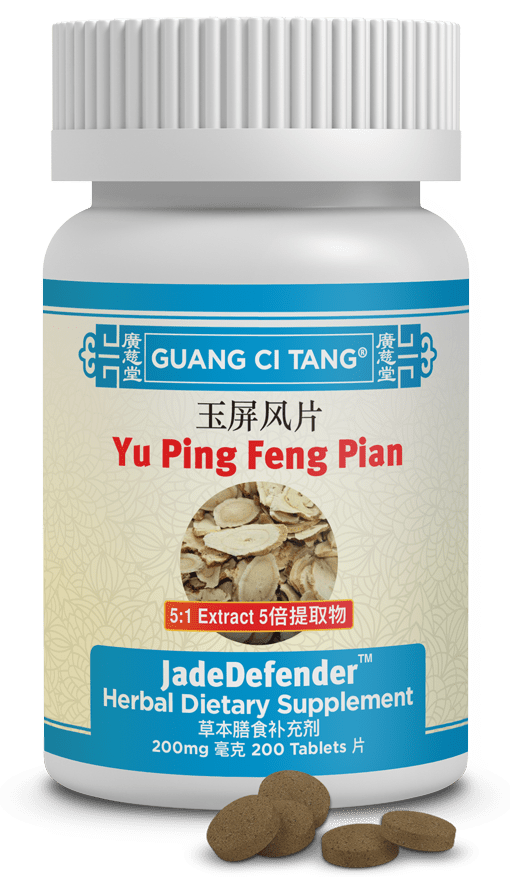
Yu Ping Feng Wan is to be used.
|
|
Cold medicines are among the most common household medicines.
While Americans typically store cold medicines like Tylenol in the medicine cabinet, Chinese tend to pack
Chinese herbal medicines for cold and flu in their medicine cabinets.
|
|
The common cold is so common that it is a leading cause for
doctor visits and missed days from school and work although it is usually mild. Over 200 viruses are the known
cause of the common cold. The common cold medicines are not antiviral and do not change the cause of a cold.
They merely relieve the cold symptoms (e. g., Tylenol Cold contains acetaminophen for pain/fever relief,
dextromethorphan
for cough suppression, pseudoephedrine for nasal decongestion respectively).
|
|
Flu, or influenza, is caused by flu (influenza) viruses and typically occurs
during the flu season (November - March). Most flu remains mild but some flu can be virulent. In fact
each year about 36,000 people in USA die from flu and its complications. Although the cold medicines are
used to relieve symptoms from most flu cases, antiviral drugs such as Tamiflu are needed to fight
the flu virus in virulent cases. Interestingly, Tamiflu is derived from a natural acid purified from a
Chinese plant star anise.
|
|
In a long history of fighting against the cold and flu,
the Traditional Chinese medicine (TCM) has developed excellent herbal remedies for the common cold and flu.
The most representative of them is
Cold SignoffTM (Yin Qiao Jie Du Pian). It is widely used in China for the cold and flu,
especially when the first symptoms such as sore throat, cough, or running nose
occur. The herbal formula contains two herbs, lonicera and forsythia, that are suggested by
some research to be antiviral. If you have ever used Airborne®, a popular cold supplement in USA,
you may want to know that its key active ingredients are actually lonicera, forsythia,
and schizonepeta, the same ones as used in Cold signoffTM.
No wonder it works.
|
|
Cold SignoffTM has been shown in studies to reduce the occurrence of a cold or flu as well.
When you are exposed to a crowded environment where someone has the cold or flu, or when you do not
want to miss an important day at work, you may take it as
a preventive measure.
|
|
Another popular Chinese cold remedy is
Gan Mao Ling. It works similarly to Cold Signoff
in acting on the first sign of cold symptoms and in cold prevention.
|
|
Currently global concerns are growing over the bird flu or
avian flu pandemic. Such concerns are surely warranted. The 1918 Spanish flu pandemic
wiped out an estimated 20 - 50 million of the world population. The latest study indicated that the fatal
flu virus was of avian origin and likely jumped directly from avians to human after gene mutations. The
current virulent bird flu virus strain emerged in 1997 and as of today (mid-Oct, 2005)
has since infected over 100 people,
claimed 60 lives in several Asian countries and spread to the Europe. What lacks for a
pandemic is that the virus does not yet transmit from human to human. However, experts agree that it is
a matter of when but not if gene mutations will allow this to happen. In fact, we may have seen the
first human transmission, and even worse is that the virus variant seems resistant to Tamiflu.1
|
|
Are we ready for the bird flu pandemic? No one thinks so. First,
one can not develop a flu vaccine against something not even existing (no one knows how the virus will be mutated)
(besides the annual issue of flu shot shortage). Second, no one knows if Tamiflu or other antiviral
drugs will be still effective (besides the issue of the Tamiflu short supply due to the seasonal harvest
of Chinese star anise). So what could we do?
|
|
Here is what the Chinese herbal medicine may come to help. You may
recall SARS (severe acute respiratory syndrome) that was surfaced in China in the early 2003 and spread to
other countries like Canada. A preventive
measure the Chinese health authorities gave to the general public is to take preventive herbal formulas, which are
basically the ancient
Yu Ping Feng Wan (Jade Screen formula). We may never know what part the formulas had played in the prevention
amid the strict temperature screen and forceful quarantine. Nevertheless, the outcome is clear as the SARS coronavirus
was effectively contained and eliminated a few months later.
|
|
A major ingredient of
Yu Ping Feng Wan is Astragalus. Both the formula and Astragalus are shown in studies to enhance
immune defense functions.
Yu Ping Feng Wan is traditionally used in China for people such as children and seniors who are
susceptible to the common cold, flu, and the subsequent bacteria infection to build up resistance to
the infections.
|
|
For the effective prevention of viral and bacterial infection,
we would recommend the use of
Yu Ping Feng Wan in people who have been easily infected by the cold or flu viruses or
by the bacteria in the respiratory tract in the past. It can be used on the daily basis for a couple
of months. We also recommend
the short term use of
Cold SignoffTM to ward off the immediate threat by the cold viruses or flu viruses
if an outbreak happens in the community.
|
|
All Chinese Herbs we carry are 100% natural herbal remedies.
They are time-tested and safe, with no pharmaceuticals,
no preservatives, no artificial colors.
|
References
1. Q. Mai Le et al., Avian flu: Isolation of drug-resistant H5N1 virus.
Nature advance online publication; published online 14 October 2005 | doi: 10.1038/4371108a
|
|
by X. Li, Ph. D.
|