



Safflower (Hong Hua): The Powerful TCM Blood Mover
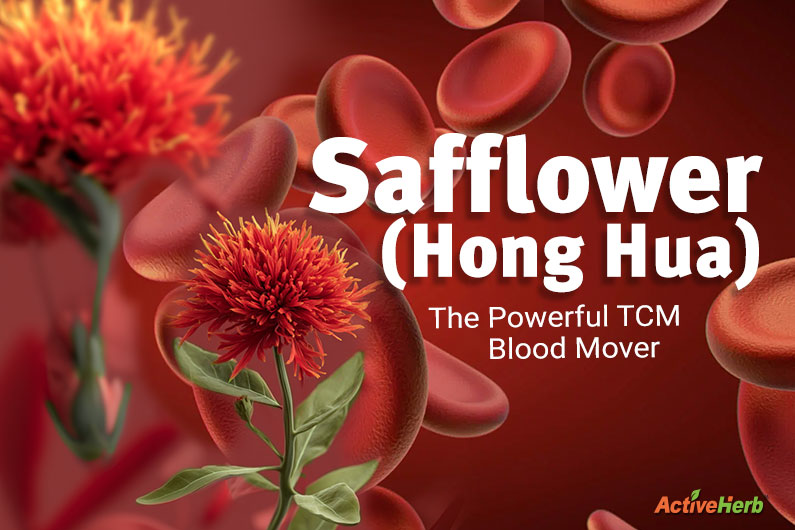
Snack much? If so, there’s a good chance you’re already familiar with safflower. Its oil is used in the baking and frying process of somewhat better-for-you chips like Kettle brand and Boulder Canyon potato chips and Late July tortilla chips. But let’s get one thing straight: vegetable oil contributes to inflammation, so stay away from too much safflower in oil form when it comes to culinary uses.
So how is it that an ingredient that can potentially contribute to the hardening of the arteries is prized in TCM for actually benefiting blood circulation? Safflower, or “Hong Hua” in TCM, is indeed an oxymoron. At first glance, it’s bright, cheerful, soft, almost dainty. But in classical medical texts, Hong Hua is described as fiery, forceful, and deeply penetrating.
Capable of warming the channels, easing discomfort, and breaking through stubborn stagnation, Hong Hua is like a Roto Rooter service, getting stuck things moving again. In TCM, the dried safflower blossoms (the crimson florets) are used, not the potato-chip fryer oil. You get the flower’s “move the Blood” strong character without the snack-aisle grease.
How Hong Hua Works in TCM
In Traditional Chinese Medicine, pain, stiffness, or a deep “stuck” feeling often comes from Blood Stasis. This TCM pattern is when blood movement slows or thickens, much like molasses on a cold day. That stagnation can show up as sharp discomfort, menstrual irregularities, lingering bruises, or areas that feel cold and numb.
Hong Hua goes to work by:
- Moving and invigorating Blood; especially in the channels.
- Warming circulation; useful when cold causes stagnation.
- Unblocking the collaterals; helping Qi and Blood flow freely.
- Relieving fixed or stabbing discomfort associated with stasis.
- Supporting menstrual flow when stagnant Blood causes irregularity.
Think of Hong Hua as the herbal equivalent of an emergency road crew coming to the scene with heat lamps, shovels, traffic cones, all working together to break up whatever caused the internal gridlock.

When You Might Reach for Hong Hua
TCM practitioners often think of Hong Hua when the body feels slow, stiff, or congested, especially in one specific area. This is the flower they turn to when something isn’t moving but needs to.
Signs that may prompt a practitioner to consider Hong Hua include:
- A fixed, stubborn ache that doesn’t migrate to another area.
- Lingering bruises that take forever to fade.
- A cold sensation in one region with underlying tension.
- Menstrual cycles with clotting, dark blood, or cramping.
- Post-injury stagnation that feels “deep” and unmoving.

Formulas Featuring Hong Hua
Because Hong Hua is one of TCM’s most potent Blood movers, it shows up in many of the system’s most reliable formulas for circulation and stasis.
It frequently appears in formulas such as:
- Xue Fu Zhu Yu Pian (Blood Stasisclear)
-> For Blood stasis in the chest and upper body. - Shen Tong Zhu Yu Pian (StasisClear)
-> For “stuck” channels, stiffness, and lingering aches. - Huo Xue Tong Mai Pian (CircuFine)
-> Promotes smooth Blood flow and supports healthy circulation in the limbs and channels. - Jiang Dan Gu Chun Pian (CholestAssure)
-> Moves Blood and transforms Phlegm-Damp to support healthy cholesterol already within the normal range. - Jin Gu Die Da Pian (Bruise Mender)
-> Activates Blood to ease discomfort from minor sprains, strains, and impact injuries. - Bu Yang Huan Wu Pian (Strocontrol)
-> Strengthens Qi while moving Blood; classically used for supporting healthy limb function after stagnation.
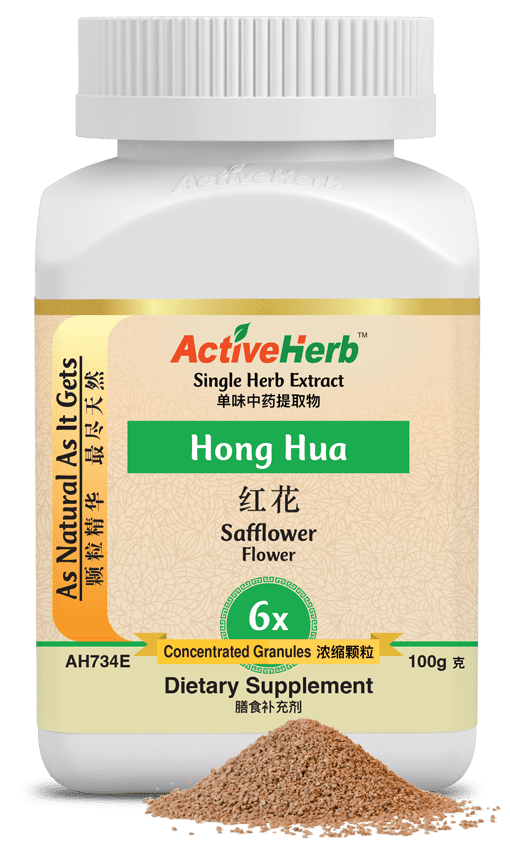
And for those who want a simple daily way to gently move Blood…
- Hong Hua Herbal Extract Instant Tea
-> A fast, convenient way to promote circulation; just dissolve in hot water for a warming, Blood-moving tea. You can also add to yogurt, smoothies, juices, etc.
When combined with herbs like Chuan Xiong (Szechuan Lovage Rhizome), Tao Ren (Peach Kernel), Dan Shen (Salvia Root), or Ji Xue Teng (Spatholobus Stem; try saying that 10 times fast!), Hong Hua becomes part of an elite team of herbal “traffic engineers” that restore movement, warmth, and smooth internal flow.
Safflower may look small and unassuming, but in TCM it’s one of the most reliable ways to warm, move, and restore the smooth flow of Blood, helping the body feel open, refreshed, and alive again.
Related Posts


About The Author
