



Mulberry in TCM: The One Herb That Could Replace Half Your Supplement Cabinet
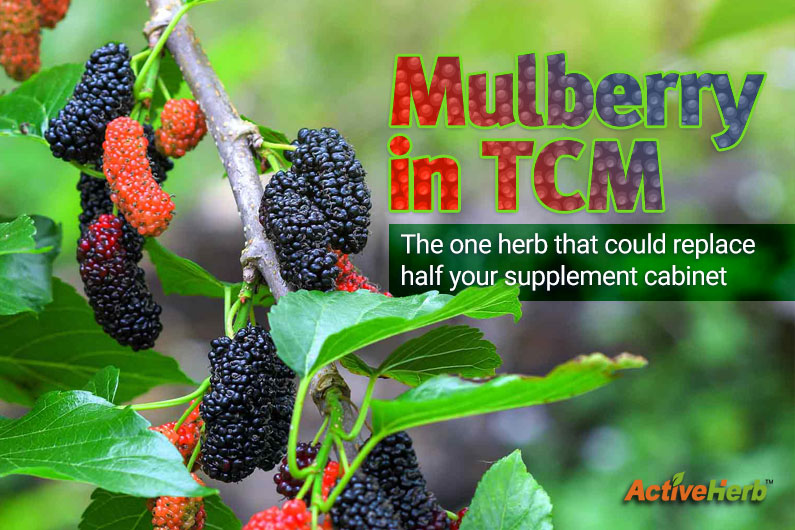
Do you ever look at your supplement cabinet and think, Do I really need all of these? One bottle for blood sugar. Another for circulation. Something else for sleep, inflammation, brain health, and digestion. Each one promises a single benefit, yet none seem to talk to each other. Instead of isolating symptoms, TCM favors herbs that work like conductors that guide multiple systems back into harmony at the same time. Mulberry is one of the clearest examples of this philosophy in action.
Mulberry: An Entire Medicinal System
In Traditional Chinese Medicine, “mulberry” refers to several medicinal substances derived from the same tree, each with a distinct function. Mulberry leaf (Sang Ye), mulberry fruit (Sang Shen), mulberry twig (Sang Zhi), and mulberry root bark (Sang Bai Pi) are all used differently depending on the pattern being treated. This multi-part usage reflects one of TCM’s core ideas: a single plant can address different layers of imbalance depending on how and where it is applied.
This is why mulberry shows up across such a wide range of formulas, from respiratory support, metabolic balance, blood nourishment, fluid regulation, and even neurological health. It is not a “one-note” herb; it is a system-wide regulator.
Mulberry Leaf (Sang Ye): Cooling Heat and Protecting Fluids
Mulberry leaf clears excess Heat while preserving the body’s Yin fluids, particularly in the Lung and Liver systems. Traditionally, uses include dry coughs, thirst, red or irritated eyes, and irritability. These symptoms are classic signs of Heat drying out the body’s internal environment.
In modern language, this cooling and fluid-protective action helps explain why mulberry leaf is often discussed in relation to metabolic balance and blood sugar support. Rather than forcing blood sugar down, TCM sees mulberry leaf as preventing the internal “burning” that consumes fluids and destabilizes metabolism over time.
Mulberry leaf’s role in Shen Qu fermentation also highlights this quality. Shen Qu (medicated leaven) was traditionally fermented by covering it in hemp or mulberry leaves, a method believed to help guide fermentation without generating excess Heat. This is an example of mulberry’s regulating influence rather than brute-force intervention.
Mulberry Fruit (Sang Shen): Rebuilding Blood and Yin
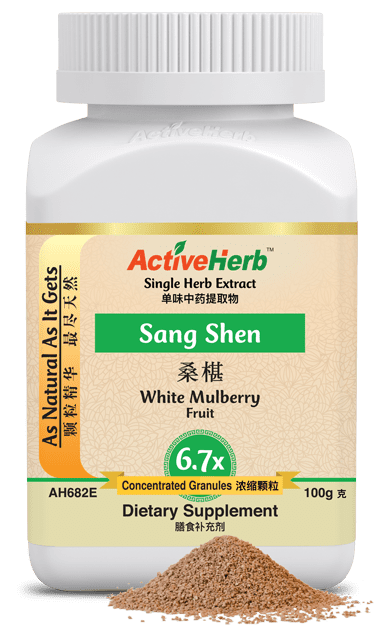
Where mulberry leaf clears excess, mulberry fruit nourishes deficiency. Sang Shen is traditionally used to replenish Blood and Yin, making it valuable for symptoms such as dizziness, occasional sleeplessness, dryness, premature graying, and constipation due to fluid depletion.
In a modern context, mulberry fruit aligns closely with recovery from chronic stress, overwork, and poor sleep. These are conditions that quietly drain Blood and Yin over time. Rather than acting like a stimulant, mulberry fruit restores what has been lost. This makes mulberry fruit ideal for long-term vitality rather than short-term energy spikes. (An energy drink it’s not!)
Mulberry and Jing: Supporting the Body’s Deepest Reserves
In TCM, Jing is the body’s deepest constitutional reserve. It’s the essence we’re born with and gradually draw upon over a lifetime. When Jing is depleted, the signs go beyond everyday fatigue: premature aging, weakness in the lower back and knees, fertility challenges, poor recovery, and a general sense that the body “doesn’t bounce back” the way it used to.
Some Chinese herbs, according to TCM theory, are believed to help replenish or protect Jing. These include goji berry and, wait for it … mulberry. Mulberry fruit (Sang Shen), in particular, has long been associated with nourishing the Liver and Kidney systems, the two organs most closely tied to Jing storage and preservation.
Rather than acting as a dramatic Jing “booster,” mulberry works in a quieter, more sustainable way. By enriching Blood and Yin while supporting Kidney and Liver harmony, it helps slow the unnecessary leakage of Jing caused by chronic stress, overwork, poor sleep, and metabolic strain. This makes mulberry especially relevant for modern lifestyles that burn through deep reserves without obvious warning signs (until they’re gone).
In this context, mulberry fits squarely into TCM’s long-term vitality strategy, which is: By protecting Jing first, many downstream issues become easier to manage, from energy and cognition to hormonal balance and aging.
Mulberry in Classical Medicine and Historical Trauma Care
Mulberry’s role in Chinese medicine extends far beyond tonics and teas. Classical texts describe the use of mulberry leaves combined with perilla leaves to help stop bleeding from wounds inflicted by swords and other metal weapons. While dramatic, this pairing reveals a refined energetic logic: cooling Blood Heat while maintaining circulation, slowing bleeding without causing stagnation.
This theme of regulation rather than suppression runs through mulberry’s historical usage and helps explain why it remains relevant in modern formulations.
Mulberry Root Bark (Sang Bai Pi) and the Endocannabinoid Connection
Mulberry root bark is traditionally used to drain Lung Heat and direct rebellious Qi downward, addressing cough, wheezing, chest fullness, and fluid accumulation. Modern research adds a compelling layer to this classical understanding.
Mulberry root bark contains resveratrol, a compound also famous for its presence in red wine. Resveratrol has been shown to increase the expression of CB1 and CB2 cannabinoid receptors on the cell surface, subtly supporting brain and nervous system function without intoxication. This places mulberry among several classic Chinese herbs known to interact with the endocannabinoid system in gentle, regulatory ways. Once again, this idea aligns closely with TCM’s emphasis on balance rather than force.
Why Mulberry Feels So “Modern” Despite Being Ancient
Mulberry supports fluids without causing dampness. It nourishes Blood without cloying. It clears Heat without weakening vitality. Few herbs manage to strike this balance so consistently across different systems.
In an era obsessed with specialization, mulberry represents an older, more integrated strategy: restore harmony, and multiple symptoms often improve at once. Instead of managing five separate complaints with five separate supplements, Traditional Chinese Medicine asks a deeper question: what underlying imbalance is tying them all together?
Mulberry has been answering that question for thousands of years.
Related Posts



About The Author
