



Astragalus & Cold Resistance: How Huang Qi Helps Turn Up Your Internal Thermostat
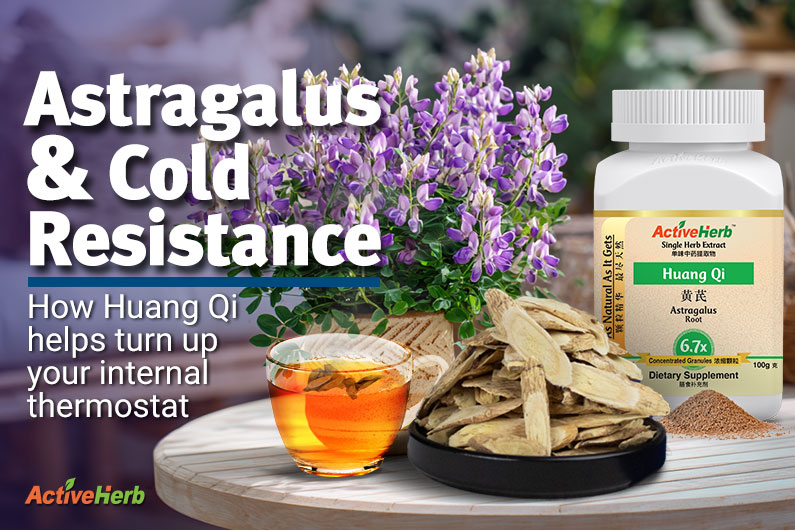
On a winter’s day at ActiveHerb headquarters in San Diego, there was a subtle but telling contrast. While sweaters and extra layers were common around the office, Sheldon Li, PhD—ActiveHerb’s co-founder—appeared perfectly at ease in a business-casual thin shirt. In his hand was a cup of instant astragalus tea. When asked about it, he casually noted that since drinking Huang Qi regularly, his tolerance to cold had significantly improved.
As of this writing, over 200 million people from New Mexico to Maine are dealing with widespread winter storms and deep cold snaps. While astragalus isn’t likely to make you feel like you’re lying on the beach in Miami when it’s 20 below outside, Traditional Chinese Medicine has long associated this herb with strengthening the body’s defensive layer and helping it better adapt to cold environments.
Astragalus: Wei Qi and the Body’s Defensive Barrier
In TCM, resistance to cold isn’t only about external temperature. It’s also about the strength of Wei Qi, the body’s defensive Qi that circulates at the surface of the body, warming the skin and regulating the opening and closing of pores. When Wei Qi is weak, cold penetrates more easily, circulation slows, and the body struggles to maintain warmth.
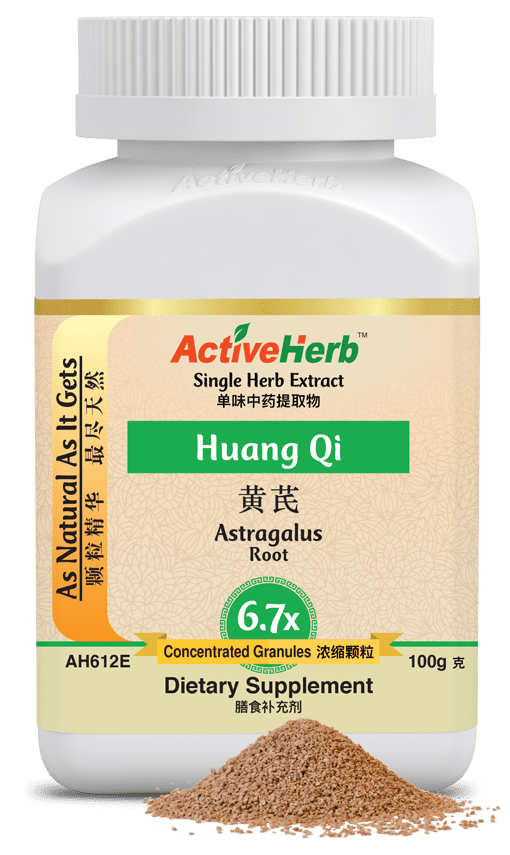
Astragalus (Huang Qi) is one of the most important herbs for strengthening Wei Qi. Modern practitioners often associate it with immune support, but in classical terms, a strong immune system and resistance to cold are inseparable concepts. Wei Qi protects against the Six External Evils, including Wind and Cold, which are considered primary drivers of winter illness and discomfort.
This understanding wasn’t always framed in immune-system language. Early descriptions of astragalus in the Shennong Bencao Jing (“The Divine Farmer’s Materia Medica”) focused on treating chronic sores, abscesses, and deep deficiencies. These conditions today are described as failures of the body’s protective and regenerative capacity. Over time, physicians observed that Huang Qi didn’t just treat disease; it helped prevent invasion in the first place.
During the Jin-Yuan reform period (1127–1368), physician Wang Haogu clarified astragalus’ broader role, writing that it replenishes defensive Qi, strengthens the Spleen and Stomach, and supports the Kidney origin. This made Huang Qi unusual among tonics. It works at the exterior, the center, and the interior simultaneously. In practical terms, it helps the body stay warm, nourished and resilient under stress.
Cold Resistance Starts in the Middle
From a TCM perspective, feeling cold easily is often less about the weather and more about Spleen Qi deficiency. The Spleen governs digestion and the transformation of food into Qi and Blood. When this process is weak, the body lacks sufficient fuel to warm the limbs and maintain circulation.
Astragalus addresses this directly by strengthening central Qi. By supporting digestion, Huang Qi ensures that food is efficiently transformed into usable energy. That energy then feeds Wei Qi, allowing it to circulate more robustly at the body’s surface. This is why people with stronger digestion usually tolerate cold better and why astragalus is traditionally used to support both immunity and physical warmth.
This dual action explains why astragalus appears in so many classic tonic formulas. According to Subhuti Dharmananda, roughly one in four widely used tonic formulas contains Huang Qi. Its reputation as a “tonic of tonics” stems from this ability to fortify energy without overstimulation.
Classical Views on Huang Qi and Cold
While ancient physicians didn’t use the phrase “cold resistance,” their descriptions strongly imply it. Astragalus was said to treat conditions where circulation failed to reach the extremities, including what classical texts described as “cold damage with the cubit pulse not arriving.” In modern terms, this points to poor peripheral circulation and weakened warming function; classic signs of insufficient Qi and Yang support.
By strengthening Qi at multiple levels, Huang Qi helps restore proper circulation, allowing warmth to reach the skin and limbs. This is one reason Huang Qi is a cornerstone herb during periods of harsh climate and physical hardship.
Modern Research and Thermal Support
Modern research hasn’t studied astragalus specifically as a “warming herb,” but its physiological effects align closely with traditional theory. Studies have shown that astragalus polysaccharides and saponins support immune regulation, improve mitochondrial efficiency, and enhance metabolic resilience. Improved metabolism and circulation are key contributors to thermoregulation, the body’s ability to generate and retain heat.
A 2017 review published in Aging and Disease identified more than 200 active compounds in Astragalus membranaceus, including astragalosides, which demonstrate antioxidant and immunomodulatory effects. Earlier animal studies suggest these compounds improve stress tolerance and energy efficiency, both of which influence how well the body adapts to cold environments.
While more human research is needed, these findings mirror what TCM has observed for centuries: when Qi is strong and well-distributed, the body copes better with environmental extremes.
The Go-To Formula for Defensive Strength
If astragalus had to be distilled into a single, time-tested formula, JadeDefender (Yu Ping Feng Pian) would be the classic choice. Featuring Huang Qi as the chief herb, along with Bai Zhu and Fang Feng, this formula is designed to strengthen Wei Qi, support digestion, and reduce susceptibility to external invasion, especially Wind and Cold.
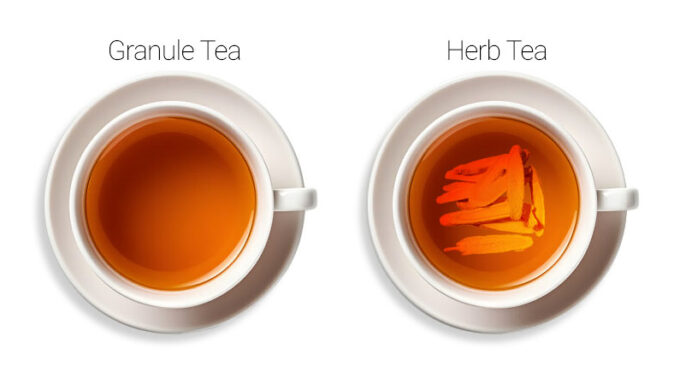
A three-herb, simple formula doesn’t mean it’s weak. JadeDefender has been used for centuries as a preventative formula, particularly during seasonal transitions and winter months. For daily use, one of the easiest ways to work with Huang Qi is exactly how Sheldon does it: instant astragalus tea. Just add one scoop of extract granules to hot water, stir, and sip. Over time, this simple habit may help your body do what it’s always been designed to do: maintain balance, resilience, and warmth, even when the temperature drops.
Related Posts




About The Author
