



Do the “Du” in TCM: The Yin and Yang of Toxicity And Safety
If you’re like the average American who takes at least one dietary supplement daily, you’ve probably asked yourself a simple question at some point: How do I really know this is safe?
According to the Council for Responsible Nutrition, roughly 75% of U.S. adults use dietary supplements. That’s tens of millions of people placing trust in capsules, powders, and tablets, often without fully understanding how those products are sourced, processed or tested.
Now layer on top of that a category like Chinese herbal medicine, where ingredients are often sourced overseas, processed using traditional methods, and grounded in a medical system that doesn’t always translate neatly into Western terms.
Enter the concept of “Du” (毒) in TCM. In a word, Du means toxicity.
“Du” Doesn’t Mean What You Think It Means
In the West “toxicity” conjures an image of calling poison control. (Remember the Mr. Yuk logo?)
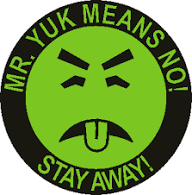
Toxicity equals poison equals danger equals stay away. Full stop.
But in Traditional Chinese Medicine (TCM), the story of Du is far more nuanced.
In TCM theory, Du can refer to not only toxicity but also potency and having a fast-acting influence. In other words, something labeled “toxic” isn’t automatically dangerous; it’s often a substance that demands respect and proper handling.
Think of Du like fire. Used properly, it cooks your food and keeps you warm. However, used carelessly (or stand too close to the fire) and you’re bound to get burned.
Toxicity: Not in the Herb, But in the How
Here’s where TCM diverges sharply from the Mr. Yuk way of thinking about toxicity.
In Western frameworks, toxicity is often treated as an intrinsic property; a chemical characteristic of a substance. Arsenic, for example, is typically classified as inherently toxic, with its risks defined primarily by its chemical composition rather than how it’s used.
In TCM, it’s not that simple.
Du is relational.
It emerges from the interaction between the following three aspects:
- The herb itself.
- The practitioner’s decisions (diagnosis, dosage, preparation).
- The patient’s body (constitution, condition, sensitivity).
An herb doesn’t act the same way in every body, at every dose, in every situation. Thus, in that sense, toxicity isn’t something an herb simply has; iIt’s something that arises based on how it’s used.
A classic example in TCM is Fu Zi (Aconite root), an herb historically recognized for its strong, even dangerous properties. In its raw form, it can be harmful. But when properly processed using traditional methods and prescribed in precise doses, Fu Zi has been used for centuries in TCM to restore “devastated Yang,” a severe collapse of the body’s warming energy, often marked by cold limbs, exhaustion, and a lack of basic vitality. (When the body is that depleted, a mild tonic likely won’t cut it.)
In other words, the goal isn’t to avoid Du herbs, it’s knowing exactly how to use them. Formulas combine herbs to balance and direct their actions. Dosage and duration are carefully controlled to achieve the intended outcome without overshooting it (and causing harm).
Even “Safe” Can Be Harmful
This idea goes even further in classical Chinese medicine.
Some may argue that there is no such thing as a completely non-toxic substance, only substances used appropriately or inappropriately..
Even everyday foods, the very things we rely on to sustain life, can become problematic under the wrong conditions. Something as simple as a cold drink in the summer might feel refreshing and beneficial to someone experiencing internal heat, yet cause digestive distress in someone whose system is already cold and depleted (Yin excess or Yang deficiency).
Excess is another factor. Foods that are perfectly safe in moderation can overwhelm the body when consumed in large quantities or over long periods. (Hello, ice cream!) What begins as nourishment can gradually burden the body systemically, slowing digestion, creating imbalance, or aggravating existing weaknesses.
In addition, timing and context are important. A food that supports the body in one season, condition, or stage of life may be inappropriate in another. (A raw salad might feel light and energizing in warm weather but leave someone feeling cold and depleted in the winter.) TCM doesn’t view substances in isolation. Instead, it evaluates how they interact with the body in real time.
Taken together, this reflects a fundamentally different way of thinking about safety. It’s not about labeling something as universally “safe” or “unsafe.” It’s about understanding the overall fit and how well something matches the needs of the individual in that moment.
It’s a paradigm shift going from “Is this toxic?” to “Is this being used correctly?”
When “Du” Goes Wrong
There have been safety issues with Chinese herbal products in the past. One of the most well-known examples involves aristolochic acid, a compound found in certain herbs like Guan Mu Tong, which has been linked to kidney damage. (ActiveHerb.com founder Sheldon Li, Ph.D. wrote about this topic in 2017.)
But this was not an industry-wide failure of TCM. Rather, the lapse came in identification, sourcing and proper use. Specifically, problems arose from: 1) incorrect species substitution; 2) adulteration; 3) Improper processing; 4) poor quality control, and 5) inappropriate dosage or duration.
This is where the vital importance of quality assurance enters the picture.
Quality Assurance: Where Tradition Meets Accountability
Understanding Du philosophically is one thing. Managing it safely in modern products is another.
This is where rigorous quality control separates trustworthy herbal medicine from everything else on the market.
It starts with sourcing and authentication. Not all herbs are created equal, and some look deceptively similar. Without proper identification, the wrong species can easily enter the supply chain. That’s why reputable manufacturers rely on a combination of traditional evaluation and modern techniques, such as microscopy and chromatography, to confirm botanical identity before anything moves forward.
From there, purity testing ensures that what shouldn’t be in the herb isn’t there. This includes screening for heavy metals, microbial contamination, pesticides, and other environmental pollutants. These are not theoretical risks, they are exactly the kinds of issues that have caused problems in the past.
Next comes processing, where the principles of TCM and modern precision intersect. Certain herbs must be prepared in highly specific ways to reduce unwanted effects and bring out their intended properties. Then there’s manufacturing, which should follow strict Current Good Manufacturing Practices (cGMP). This ensures consistency, cleanliness, traceability, and control at every step, from raw material to finished product.
Finally, batch-level testing verifies that each product meets defined standards for safety, potency, and consistency. Only then is it considered ready for use.
Put simply: when Du is respected, it is carefully controlled at every stage, not just understood in theory.
Du in TCM: Conclusion
In Traditional Chinese Medicine, the same quality that gives an herb its strength is what requires it to be used with precision. When handled correctly, that strength can be directed and refined. When handled poorly, it can create problems.
That’s why quality assurance serves as a critical link between ancient wisdom and modern trust.
References:
DAI, Binli. The Multifaceted Du (毒): Practitioners’ Understanding and Clinical Applications in Traditional Chinese Medicine. Chinese Medicine and Culture 9(1):p 16-29, March 2026.
Council for Responsible Nutrition. “CRN Survey Shows Consistent Supplement Usage Increase and Specialty Product Use Over Time.” Council for Responsible Nutrition; 2023.
Related Posts

About The Author
