



MILK IN TCM: DOES IT DO A BODY GOOD?
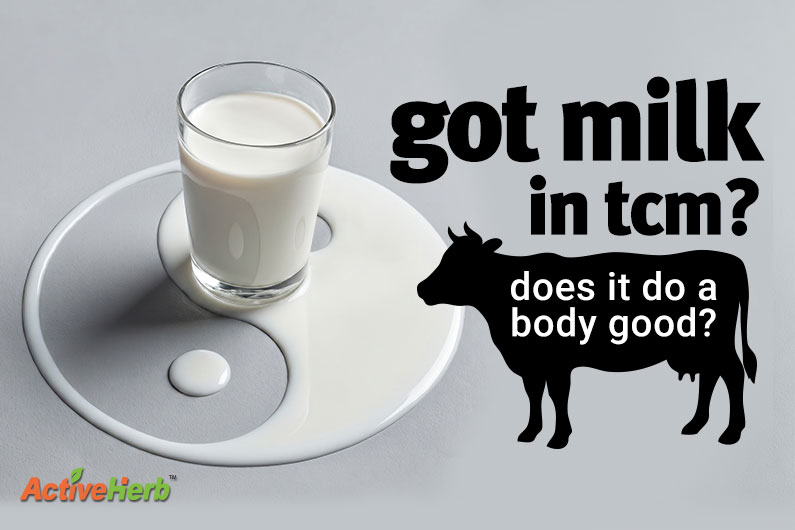
Milk occupies a strange place in modern nutrition. It is often promoted as essential for bone health. Remember the “Got Milk” and “Milk: it does a body good” ad campaigns? Yet, for millions of people, drinking milk makes you feel bloated, congested or fatigued after drinking it. And that’s not even counting the lactose-intolerant! This contradiction isn’t new; it simply reflects a deeper truth that Traditional Chinese Medicine (TCM) has recognized for centuries, even if modern dairy products are produced differently than in ancient times.
How TCM Judges Milk
In TCM, foods are not judged in absolute terms. They are understood through their energetic properties and how those properties interact with the individual. Milk is considered sweet and slightly cooling, with the ability to nourish fluids and support the Lung and Stomach systems. In cases of dryness or depletion, it may act as a gentle, restorative food.
However, that same moistening quality can also contribute to imbalance. Milk is relatively rich and heavy, meaning it requires a strong digestive system to process it efficiently. When that system is functioning well, milk can be integrated without issue. When it is not, however, milk may linger, creating a sense of heaviness rather than nourishment. Many a milk-shake lover can no doubt relate!
This dual nature is why milk cannot be universally categorized. Its effects depend less on the milk itself and more on the internal state of the person consuming it.
The Role of Digestion: Why Milk Feels Different for Everyone
In TCM, digestion is governed by the Spleen and Stomach systems. These organs are responsible for transforming food into Qi and Blood, the fundamental substances that sustain the body. When this system is strong, it efficiently extracts nutrients and distributes them where they are needed.
When it is weak, the process becomes sluggish.
Milk, due to its dense and moist nature, places a greater demand on digestion than lighter foods. If the Spleen is already under strain, whether from stress, poor diet, or a more naturally-weak constitutional type, milk may not be fully transformed. Instead, it accumulates as Dampness, a condition characterized by heaviness, stagnation, and impaired fluid metabolism.
This is often why people experience symptoms such as bloating, brain fog, mucus production, or a lingering sense of fullness after consuming dairy. From a TCM perspective, these reactions are not random intolerances but signals that the digestive system is overwhelmed.
Conversely, someone with robust digestion may consume milk without any noticeable discomfort. For that individual, milk can provide nourishment rather than make you feel like a brick is in your stomach. This variability is central to TCM thinking: the same food can produce entirely different outcomes depending on the condition of the body.
Temperature, Timing and Drinking Method
Beyond constitution, TCM places significant emphasis on how food is consumed. Temperature, timing, and quantity all influence how well a substance is processed by the body.
Cold foods, in particular, are believed to weaken digestion. (It may sound sacrilegious to microwave your milk shake!) The digestive system relies on warmth to function efficiently, and introducing cold substances can slow or inhibit this process. This is why iced milk or cold dairy drinks may lead to discomfort, especially in individuals with already sensitive digestion.
Warming milk before drinking it changes its effect. Gentle heat supports the digestive system, making the milk easier to transform and less likely to create stagnation. Similarly, consuming milk in moderate amounts rather than large servings reduces the burden on the Spleen and Stomach.
Timing also plays a role. Drinking milk on an empty stomach or late at night, when digestion naturally slows, can increase the likelihood of heaviness and discomfort. By contrast, consuming it earlier in the day or after a meal allows the body to process it more effectively.
These adjustments may seem minor, but they often determine whether milk feels nourishing or problematic.
Not All Milk Is Created Equal
The concept of milk in TCM developed in a world that looked very different from today’s dairy industry. Historically, milk was not a dietary staple in most parts of China. When it was consumed, it typically came from animals raised in natural conditions and was used in relatively small amounts.
Modern dairy production has changed that equation. Most milk now comes from grain-fed cows and undergoes significant processing before consumption. These changes can alter how the body responds to it, often making it more difficult to digest and more likely to contribute to Dampness.
There are also differences in protein composition. Some people find milk containing A2 casein (from Eastern Europe dairy cows) easier to tolerate than the more common A1 variety. Goat milk, which has been used traditionally in various cultures, is often considered gentler on digestion due to its structure and composition (less lactose).
Plant-based alternatives introduce additional variables. Almond milk tends to be lighter but may be slightly drying. Oat milk, while popular, can be more damp-forming due to its naturally moistening qualities. Coconut milk is rich and nourishing but can easily become too heavy if consumed in excess.
All of this reinforces a key principle in TCM: the quality, source, and type of food matter just as much as its basic properties.
Bone Health: A Different Framework Than Calcium Alone
Milk’s reputation as a cornerstone of bone health is largely based on its calcium content. However, this perspective does not fully align with either global health data or TCM theory.
Epidemiological observations have shown that countries with high dairy consumption often have higher rates of osteoporosis and fractures. In contrast, populations that consume little dairy tend to have lower fracture rates. This discrepancy has been referred to as the Calcium Paradox.
One explanation is that certain dietary patterns, including high intake of processed dairy, may contribute to internal imbalances that prompt the body to draw calcium from the bones in order to maintain equilibrium. Over time, this can weaken bone structure rather than strengthen it.
In TCM, bone health is governed primarily by the Kidney system. The Kidneys are responsible for growth, development, and the production of marrow, all of which directly influence bone strength. If Kidney energy is deficient, bones become more vulnerable regardless of calcium intake.
Circulation also plays a critical role. Adequate Blood flow is necessary to nourish the bones, and without it, even sufficient nutrients may not reach their destination. This is why movement and exercise are considered essential components of maintaining skeletal health.
From this perspective, milk is not a primary solution for bone strength but one of many factors that may or may not contribute, depending on the individual.
So… Should You Drink Milk, According to TCM?
Traditional Chinese Medicine does not provide a universal answer to this question. Instead, it encourages observation and awareness.
Milk can be beneficial in certain contexts, particularly when there is dryness or depletion. It can also be problematic when digestion is weak or when Dampness is already present. The same person may tolerate milk well at one point in time and poorly at another, depending on their overall state of health.
A practical approach is to experiment with how milk is consumed. Try it warm instead of cold. Keep portions moderate. Try A2 milk. Pay attention to how your body responds over time rather than relying on assumptions or general guidelines.
The goal is not to force milk into your diet or eliminate it entirely, but to understand how it interacts with your system. When viewed through this lens, milk becomes less of a nutritional rule and more of a variable, one that can be adjusted based on your needs.
Ultimately, the most valuable insight TCM offers is not about milk itself, but about the importance of listening to your body. In that awareness, you will find a clearer answer than any universal recommendation can provide.
References:
World Health Organization. Prevention and Management of Osteoporosis. WHO Technical Report Series 921, 2003.
Feskanich D, Willett WC, Stampfer MJ, Colditz GA. Milk, dietary calcium, and bone fractures in women: a 12-year prospective study. The American Journal of Clinical Nutrition. 1997;65(4):1145–1150.
Harvard T.H. Chan School of Public Health. Calcium and Milk: What’s Best for Your Bones and Health?
Pal S, Woodford K, Kukuljan S, Ho S. Milk Intolerance, Beta-Casein and Lactose. Nutrients. 2015;7(9):7285–7297.
Related Posts



About The Author
