



The 8 Deficiency Patterns of TCM: Which One’s Holding You Back?
You’re dragging today. Why do you have less energy than a sloth after Thanksgiving dinner?
Is it the full moon? Not enough coffee? Did Mercury wander into retrograde again? Did binge-watching Netflix until 2 a.m. finally catch up with you?
Or maybe you’re simply having an off day. It happens. There doesn’t need to be an ancient energetic explanation for every afternoon when your brain checks out before you do.
But when feeling depleted becomes a pattern, Traditional Chinese Medicine (TCM) looks at the situation differently.
Rather than simply asking, “Why am I tired?” TCM asks what, specifically, may be running low.
Is it:
- Qi?
- Blood?
- Yin?
- Yang?
- Jing?
Or is one (or more) particular TCM organ system struggling to do its job?
Enter the TCM concept of deficiency patterns.
In TCM, a deficiency doesn’t necessarily mean that a measurable substance in the body is medically deficient such as having low iron, vitamin B12, or a low red blood cell count. Instead, it suggests that a particular substance, function, or energetic system isn’t providing enough support to maintain balance.
In Western medicine, diagnostic tests can help pinpoint deficiencies that prevent you from feeling your best. Admittedly, TCM concepts sometimes seem more esoteric to the lay person.
But try picturing it this way: Think of your body as a house. Sometimes the electrical system is underpowered. Sometimes the furnace isn’t producing enough heat. Sometimes the plumbing is running dry.
It’s the same house but with very different underlying problems.
And sometimes, more than one system can be acting up at the same time.
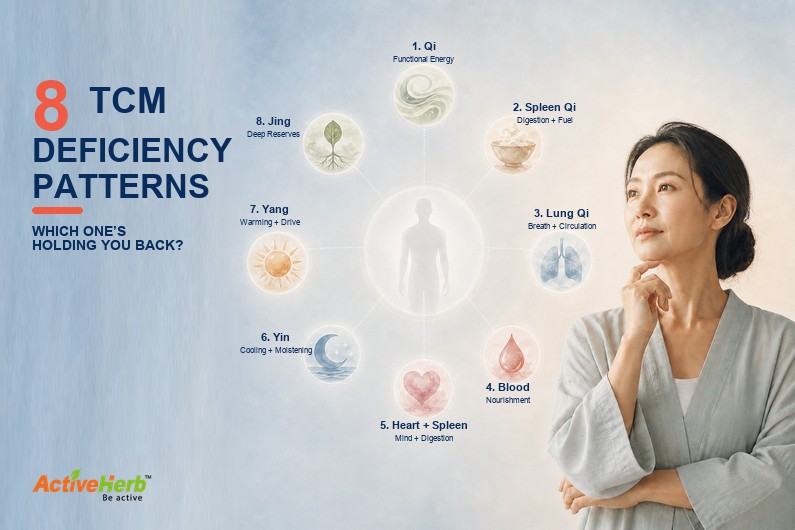
Here are eight of the most common ways deficiency can show up in TCM.
1. Qi Deficiency: Your Internal Battery Is Stuck at 12%
You know when your phone hits 12% and suddenly every activity becomes a strategic decision? Should you check Instagram? Can you afford to open Google Maps? Do you dare watch a video?
Your smartphone at 12% is suffering from Qi deficiency. It needs to be charged, stat!
So what’s the TCM equivalent of plugging yourself into a charger? How do you “tonify”
Qi, essentially helping replenish and strengthen the body’s functional energy rather than merely giving it a temporary jolt. (Here’s looking at you, triple-shot caramel macchiato!)
Qi is often translated as “energy,” although in TCM it represents something broader; it’s the functional force that helps the body perform its countless everyday activities.
When Qi is abundant, there’s enough gas in the tank. But when Qi is deficient, ordinary tasks can feel disproportionately demanding.
Common signs associated with Qi deficiency in TCM may include:
- Low energy
- Weakness
- Getting tired easily
- Shortness of breath with exertion
- A weak voice
- Spontaneous sweating
- Reduced appetite
- A tendency to want to sit or lie down
Instead of providing a quick stimulant-like effect, the traditional TCM approach is to tonify, or gradually strengthen, Qi.
To split TCM hairs here, several of the patterns below are technically more specific forms of Qi deficiency. Consider #1 on this list the umbrella category.
→ Need To Revive Your Qi? Learn more about QiVive™ (Bu Zhong Yi Qi Pian), designed to nourish central Qi and support energy, stamina, and physical strength.
2. Spleen Qi Deficiency: The Kitchen Staff Has Called in Sick
The Spleen in TCM is not simply the anatomical spleen.
It represents a much larger functional system associated with digestion, extracting nourishment from food, transporting nutrients, managing fluids, and helping generate Qi and Blood.
So what exactly is Spleen Qi Deficiency?
Picture a busy restaurant kitchen. The food arrives, the sous chefs chop it, the chefs cook it, plates it, and sends it where it needs to go.
With strong Spleen Qi, the kitchen runs like a Michelin-starred operation.
However, with Spleen Qi Deficiency, three cooks have called out, the sous chef burned the rice, and no one knows where table 7’s order went.
Likewise, with Spleen Qi Deficiency, the food enters the digestive system, but the body isn’t efficiently transforming and transporting its nourishment.
Common signs of Spleen Qi Deficiency include:
- Bloating after eating
- Poor appetite
- Loose stools
- Fatigue, especially after meals
- A heavy feeling
- Brain fog
- Muscle weakness
- A tendency toward worry or overthinking
This is one reason TCM doesn’t always look at fatigue as purely an “energy” problem. If your digestive system isn’t effectively producing Qi from food, strengthening digestion may be part of the bigger picture.
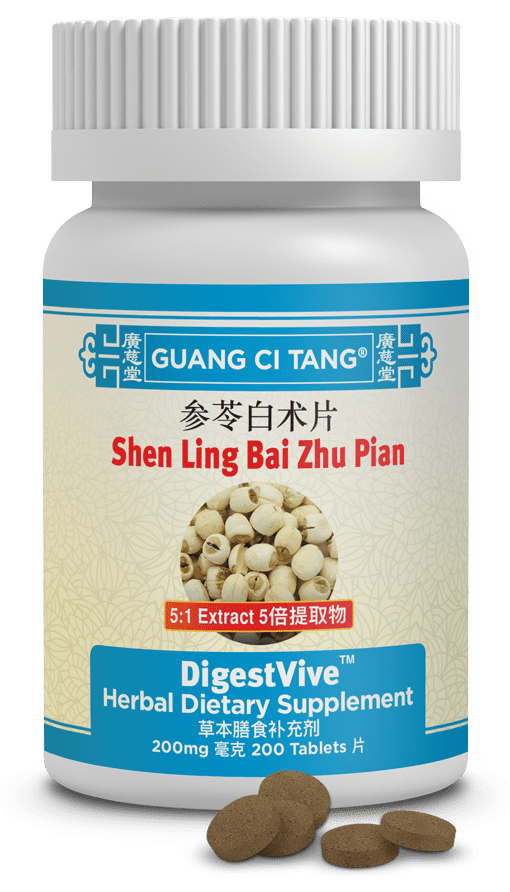
→Explore ActiveHerb.com’s Digestive Health offerings, including DigestVive™ (Shen Ling Bai Zhu Pian), SpleenVigor™ (Jian Pi Pian), and Stomakinder™ (Xiang Sha Liu Jun Zi Pian) for different presentations involving weakened Spleen function.
3. Lung Qi Deficiency: Your Bellows Have Lost Their Oomph
Before electric blowers existed, a blacksmith used bellows—the small accordion-looking contraption that you squeeze together—to force air into a fire.
Strong bellows create a bigger flame, while the opposite produces a sad little puff of air.
That’s one way to understand Lung Qi.
In TCM, the Lungs help govern respiration and play an important role in the production and movement of Qi throughout the body.
When Lung Qi is deficient, your internal bellows aren’t exactly giving it their all.
Traditional signs may include:
- Shortness of breath
- Getting winded easily
- A weak or quiet voice
- Fatigue
- Reluctance to speak
- Spontaneous sweating
- Greater susceptibility to external environmental influences
Notice the overlap with general Qi deficiency? TCM patterns are less like separate filing cabinets and more like a very complicated family tree.
The important distinction is that Lung Qi deficiency emphasizes respiratory function and the Lung system’s role in circulating Qi.
→ Need Lung Support? ActiveHerb.com’s Lung Health collection includes formulas addressing different Lung patterns. For instance, Lung Qi deficiency and Lung Yin deficiency are not the same thing. The former involves weakened Lung function, while the latter involves insufficient cooling and moistening support for the Lungs. Therefore, formula selection should match the actual pattern.
4. Blood Deficiency: The Delivery Trucks Are Running Half Empty
Blood in TCM sounds familiar because, obviously, you have blood.
But TCM Blood (often written with a capital B) is a broader concept than the substance measured in a standard blood test.
TCM Blood nourishes the tissues and supports everything from the muscles and skin to menstruation, sleep, and the mind.
As for the helpful analogy: Imagine that your body has thousands of delivery trucks moving around 24/7. Their job is to bring nourishment everywhere it’s needed.
With Blood deficiency, the trucks are still driving but they’re just not carrying enough cargo.
Traditional signs of Blood Deficiency may include:
- Pale complexion
- Lightheadedness
- Dry skin
- Dry hair
- Brittle nails
- Poor sleep
- Blurred vision
- Scanty menstruation
- Fatigue
- Dry stools
Blood deficiency is especially associated with the Liver in TCM, because Liver Blood nourishes the tendons, eyes, menstrual cycle, and other tissues.
And here’s yet another example of how interconnected TCM organs are: Spleen Qi helps produce Blood from food. So prolonged Spleen Qi deficiency may eventually contribute to Blood deficiency. When this occurs, not only does the kitchen stop producing enough nourishing meal, eventually the delivery trucks don’t have much to deliver.
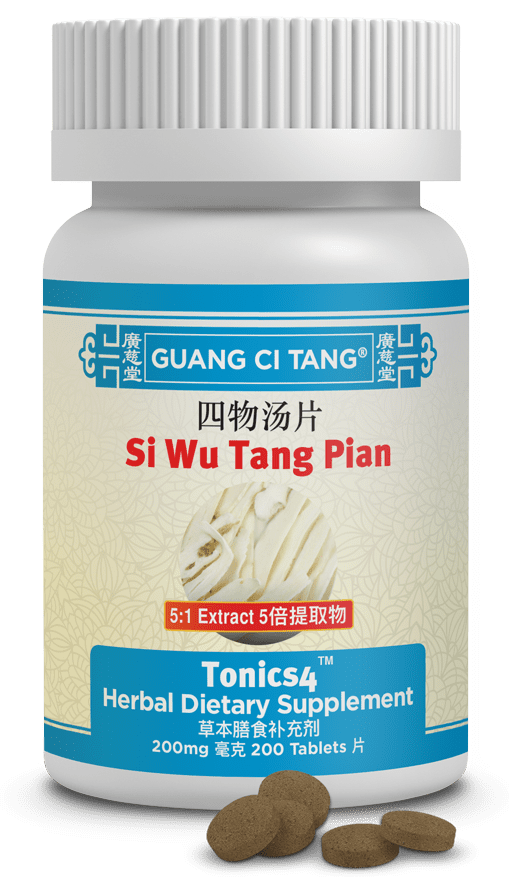
→ TCM’s Fundamental Blood Tonic: Tonics4™ (Si Wu Tang Pian) is the classic Four-Substance formula traditionally used to nourish Blood, particularly Liver Blood.
5. Heart and Spleen Deficiency: Your Office Staff Is Exhausted And Disorganized
Misery loves company, even in TCM.
Some deficiency patterns travel in packs. Heart and Spleen deficiency is a good example.
The Spleen helps generate Qi and Blood from nourishment, while the Heart, in TCM, governs Blood and houses the Shen, commonly translated as the Spirit or Mind.
So imagine a small office. The Spleen is the operations department making sure everybody gets the resources they need. The Heart is management, trying to keep everything calm, organized, and mentally focused.
Now imagine the operations team is understaffed while management hasn’t slept properly in three weeks. Consequently, the office is a wreck. Emails are forgotten and the C-suite staff can’t concentrate. The incompetent CEO has been looking for their glasses for ten minutes while wearing them.
In reality, this dual Deficiency pattern manifests as:
- Fatigue
- Poor appetite
- Pale complexion
- Difficulty concentrating
- Forgetfulness
- Trouble falling or staying asleep
- Mental restlessness
- Worry
- A feeling of being physically and mentally depleted
This TCM Deficiency pattern represents why TCM rarely treats one symptom in isolation.
Poor sleep, digestive weakness, forgetfulness, and fatigue may seem unrelated from a symptom-by-symptom perspective. However, within TCM pattern theory, they can form one coherent picture.
→ Harmonize your Spleen & Heart: SpleenVive™ (Gui Pi Pian) strengthens the Spleen and Heart, nourishes Qi and Blood, and calms the mind.
6. Yin Deficiency: Your Engine Is Running With Too Little Coolant
If Yin and Yang had personalities, Yang would be the person yelling, “LET’S GO!” while Yin would be standing nearby holding the water bottle and saying, “Take it easy; cool your engines.”
Yin is associated with cooling, nourishing, moistening, and restorative qualities.
So picture an engine.
While Yang provides heat and combustion, Yin is the coolant that prevents the engine from blowing up. when there isn’t enough Yin, the engine may still run, but runs hot and dry.
In a human engine, signs of Yin deficiency include:
- Feeling hot later in the day
- Night sweats
- Warm palms or soles
- Dry mouth or throat
- Dry skin
- Restlessness
- Trouble sleeping
- Thirst
- A redder tongue with less coating
One of the classic TCM concepts associated with Yin deficiency is “empty heat.” This concept means that there isn’t necessarily too much Yang. Rather, it may simply be too little Yin to keep Yang appropriately balanced.
Another way to think of Yin Deficiency is picturing two kids perfectly balanced on a seesaw. If Yin gets off the seesaw, it’s not like Yang gained 50 pounds. But Yang suddenly dominates, even though Yang itself hasn’t actually increased.
How to prevent Yang domination (“domination” is not a TCM term) or Yin Deficiency?
→ Consider ActiveHerb.com’s collection of Yin Tonics, whichincludes YinVive™ (Liu Wei Di Huang Pian) for nourishing Kidney Yin, and YinGreat™ (Da Bu Yin Pian) for stronger Yin deficiency patterns and symptoms, including hot flashes and night sweats.
7. Yang Deficiency: Somebody Forgot to Pay the Heating Bill
If Yin deficiency is an overheating engine, Yang deficiency is a furnace that keeps clicking but never really warms the house.
Yang supplies warming, activating, and motivating functions. But when Yang is deficient, the entire system can seem to slow down.
Traditional signs of Yang Deficiency may include:
- Feeling unusually cold
- Cold hands and feet
- Low energy
- Weakness
- Wanting warmth
- Loose stools
- Frequent or clear urination
- Lower-back or knee weakness in Kidney Yang patterns
- Reduced vitality
Qi deficiency and Yang deficiency can look similar because both may involve fatigue. The difference is that Cold is the giant flashing clue, whereas someone with Qi deficiency may simply feel depleted. Someone with significant Yang deficiency is depleted and wants to turn up the thermostat even though it’s Miami in summer.
Key point: Kidney Yang is particularly critical because the Kidney organ system is viewed as a root source of the body’s Yin and Yang.
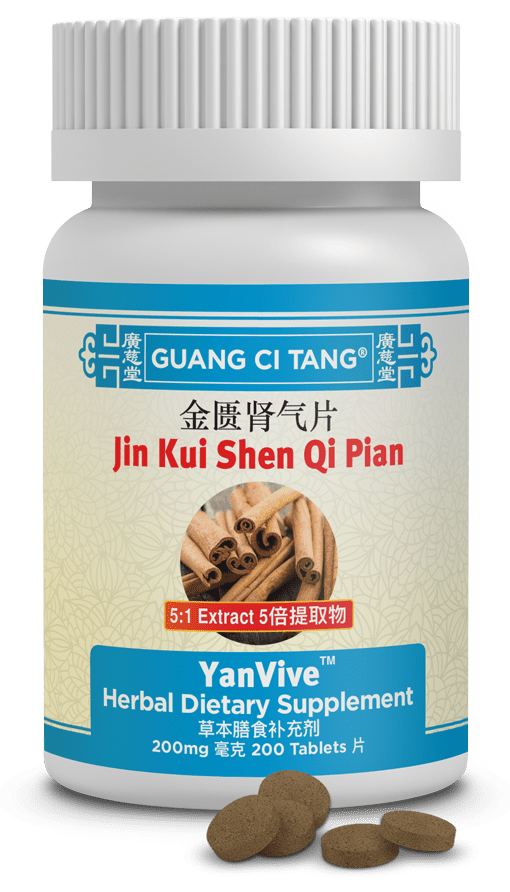
→ ActiveHerb.com’s Yang Tonics include YanVive™ (Jin Kui Shen Qi Pian), YanVive Plus™ (You Gui Pian), and Youngain™.
8. Jing Deficiency: Your Long-Term Savings Account Is Getting Low
Qi is the money in your checking account while Jing is your retirement account.
You really don’t want to blow through your Jing buying metaphorical jet skis and other expensive toys you don’t really need. Jing (the body’s Essence) is one of the deepest foundational substances in TCM. Think of it as your body’s long-term reserve tank; it’s the constitutional vitality you’re born with and gradually draw upon for growth, reproduction, resilience, and aging.
Part of Jing is considered inherited from your parents at conception. Another portion is supported after birth through nutrition, breathing, rest, and lifestyle.
Jing is closely associated with:
- Growth
- Development
- Reproduction
- Sexual vitality
- Bones
- Aging
- The brain and marrow
- Long-term constitutional strength
Because Jing represents deeper reserves, Jing deficiency is traditionally associated more with aging, constitutional weakness, chronic depletion, or developmental and reproductive concerns than with simply having a lousy Tuesday.
Possible signs may include:
- Weakness of the lower back and knees
- Reduced stamina
- Premature signs associated with aging
- Weak bones
- Reproductive weakness
- Poor memory
- Diminished vitality
Think again about that retirement account.
One late night won’t bankrupt you.
But chronically living beyond your energetic means via poor sleep, relentless overwork, prolonged stress, or poor diet depletes long-term reserves.
TCM therefore places tremendous value on preserving Jing, not merely trying to replenish it after years of depletion.
→ Support Jing with YinVive Plus™ (Zuo Gui Pian), which nourishes Kidney Yin and Jing, while Youngain™ supports Yang while also helping replenish Jing Essence.
Which TCM Deficiency Pattern Do You Have?
Two people can walk into a TCM practitioner’s office complaining of the exact same symptom (say, fatigue) and walk out with completely different pattern assessments.
One may need Qi tonified while the other may need Blood nourished. Throw in a third person, who a TCM expert concludes has deficient Yang.
Deficiency patterns are TCM diagnostic frameworks, not Western medical diagnoses. Persistent fatigue, breathing changes, unexplained weakness, menstrual changes, dizziness, or other ongoing symptoms deserve appropriate medical evaluation rather than being automatically attributed to an energetic imbalance.
For individualized Chinese herbal recommendations, an experienced TCM practitioner can evaluate the full pattern, including symptoms, tongue, pulse, constitution, and overlapping signs.
Related Posts

About The Author
