



Du Zhong in TCM: How Eucommia Bark Supports Your Back, Knees and Bones
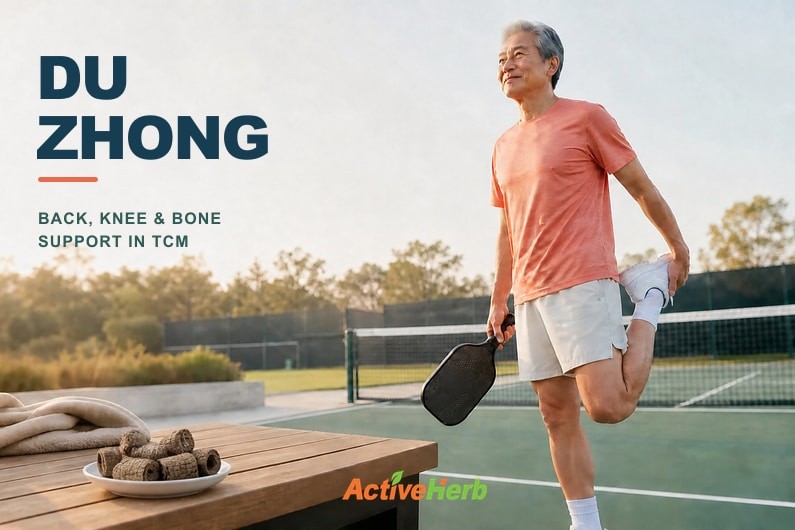
The pickleball craze shows no signs of slowing. And along with all that “staying out of the kitchen” and smashing balls at your opponent like a demonic ping-pong player, pickleball injuries are climbing in step with its popularity (no pun intended). In fact, one recent analysis of U.S. emergency department data estimated that pickleball-related injuries topped 24,000 in 2023.
But you don’t need to be a pickleball addict to experience the wear and tear of your knees, back and connective tissue. The aging process itself can accomplish that, no paddle needed.
If you can relate, Du Zhong, or Eucommia Bark, is an herb worth getting to know. Centuries before pickleball took the world by storm, Traditional Chinese Medicine was using the bark of the Eucommia ulmoides tree for the back, knees, bones, tendons and ligaments.
What is Du Zhong Used for in TCM?
Obviously, nobody was nursing a sore knee after a three-set pickleball match during China’s Han Dynasty two millennia ago. But Du Zhong was already being documented then in the Shen Nong Ben Cao Jing, one of the foundational texts of Chinese herbal medicine. Ancient sources described it in connection with strengthening the tendons and bones and addressing discomfort of the lower back and knees. These are uses that remain closely associated with the herb today.
How Does Du Zhong Support the Back, Knees and Bones in TCM?
Du Zhong is a tonic herb for the Liver and Kidney organ systems. That can sound a little confusing if you’re thinking strictly in terms of Western anatomy. In TCM, the Liver and Kidneys are part of larger functional systems that are associated with strength, movement, aging and the health of the bones, tendons and ligaments.
The Kidneys “govern the bones” in TCM and are thought to have a particularly close relationship with the lower back and knees. When Kidney energy becomes depleted, weakness, stiffness or soreness may rear their ugly heads in these areas. The Liver, meanwhile, is said to “govern the sinews,” meaning the tendons, ligaments and related connective tissues that help the body move smoothly.
Rather than viewing an achy knee or stiff lower back only as an isolated problem, TCM also considers underlying patterns of strength, nourishment and circulation. Du Zhong represents that bigger-picture approach.
How Does Du Zhong Support Healthy Aging?
Du Zhong’s reputation in TCM extends beyond the occasional sore knee or stiff lower back. As a tonic herb, it is traditionally used to strengthen the body over time rather than simply address a temporary complaint.
Although Du Zhong is most often associated with tonifying Kidney Yang, its traditional role is actually more balanced. It nourishes the body’s deeper Jing (“essence”) and also has Yin qualities. That combination helps explain why it has traditionally been used as a strengthening tonic for men and women, particularly when weakness involves the lower back, knees, bones and connective tissues.
As we get older, Kidney energy declines, which may show up as reduced strength, stiffness or a greater tendency to feel worn down.
Featured ActiveHerb Products With Du Zhong
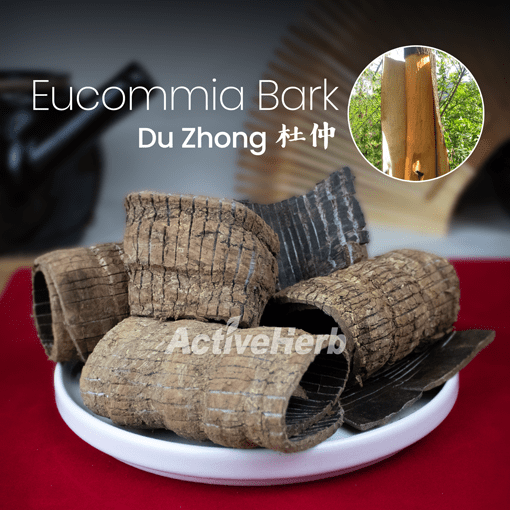
If you’re using Eucommia leaves, you may be barking up the wrong tree. While Eucommia leaves also contain active compounds, Du Zhong specifically refers to the bark, the part traditionally prized in Chinese herbal medicine. The bark has a different chemical profile than the leaves, so if you want Du Zhong in its traditional form, look for Eucommia bark rather than leaf extract.
Several ActiveHerb formulas include Du Zhong (Eucommia Bark), each using the herb within a somewhat different TCM strategy:
KneeKinder™ (Xi Guan Jie Tong Pian)
This Guang Ci Tang signature formula supports joint mobility and function, and addresses the TCM pattern of Wind-Cold-Damp obstruction while also providing internal tonic support.
In other words, it’s traditionally suited to the kind of achy, stiff, heavy joint discomfort that TCM associates with cold and damp conditions. So if you love pickleball but your knees are less enthusiastic about playing outdoors in a Seattle winter, this is the kind of TCM pattern the formula was designed to address.
EzJoint™ (Feng Shi Xiao Tong Pian)
Another signature Guang Ci Tang formula, EzJoint takes a somewhat different approach to joint support. While KneeKinder is more tonic and restorative, EzJoint is more circulation- and obstruction-focused, promoting the movement of Qi and Blood.
Youngain™ (Huan Shao Zhuang Yang Pian)
Traditionally used to tonify Kidney Yang, this Guang Ci Tang signature formula is geared more broadly toward vitality and physical strength while incorporating Yin-nourishing herbs for balance.
AllTonic™
This ActiveHerb.com Modern Essentials formula casts an even wider net. Designed as a comprehensive TCM tonic for overall health and healthy aging, AllTonic is like the TCM version of a multivitamin, with herbs that support Qi, Blood, Yin and Yang as we age. Du Zhong is specifically included for its traditional role in supporting the lower back, bones and Kidney Yang.
What Modern Research Says About Eucommia Bark
Modern research is exploring several areas that overlap with Eucommia’s traditional uses. For instance, a review published in Evidence-Based Complementary and Alternative Medicine noted that Eucommia has long been used in Chinese herbal medicine in formulas for cardiovascular health, and researchers have studied its potential effects on blood-vessel relaxation.
Researchers have also documented antioxidant activity in Eucommia extracts, another area of interest in healthy-aging research.
Perhaps most relevant to Du Zhong’s traditional reputation, preliminary animal and laboratory studies have explored its effects on bone health. Researchers have observed changes in the activity of cells involved in building and breaking down bone, along with improvements in bone density and strength in some animal models.
Du Zhong: An Ancient Herb For Active Weekend Warriors
Du Zhong has been used in Chinese medicine for centuries to support the Kidneys, lower back, knees, bones and sinews. Its traditional role as a strengthening tonic makes it especially relevant for active adults who want to stay mobile as they age.
So whether your weekend involves hiking, cycling or chasing one more pickleball drop shot across the court, Du Zhong offers an old-school TCM approach to keeping the body strong enough to stay in the game.
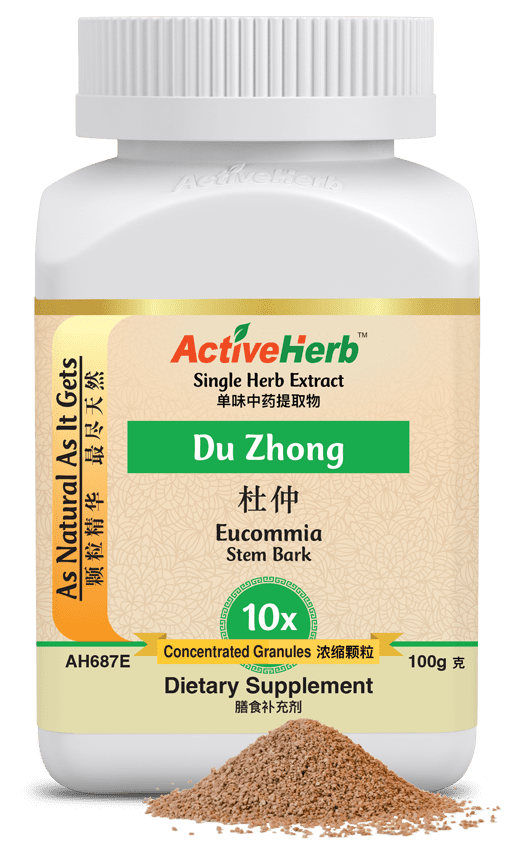
For modern convenience, check out Eucommia Bark extract granules. Mix a scoop (provided) in warm/hot water for instant herbal tea. If you prefer a more traditional preparation, raw bulk Du Zhong herb is also available.
Have you ever used Eucommia Bark? Leave a comment.
Related Posts


About The Author
