



Let’s Talk About ‘Nao’, Now: Supporting Brain Health in TCM
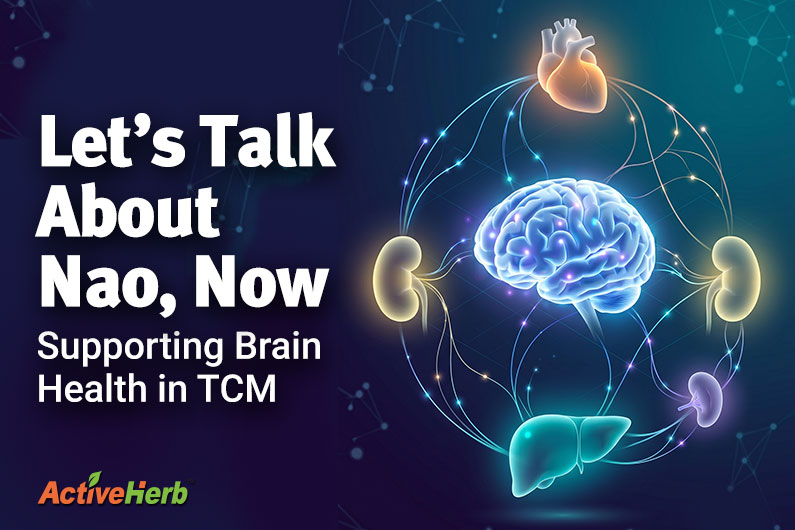
In TCM, the brain is not a wrinkly, creepy, walnut-shaped lonely organ sitting in the skull, running the show like a tiny CEO with a headset and a whiteboard.
Instead, TCM sees the brain as part of a much larger internal network. Your memory, focus, clarity, emotional steadiness, sleep, and ability to feel mentally “present” are all connected to deeper systems in the body.
That includes the Kidneys, which store Essence (Jing). The Heart, which houses the Shen, or spirit. The Spleen, which helps transform food into Qi and Blood. And the Liver, which supports the smooth movement of Qi. Brain health in TCM also depends on healthy circulation, which helps deliver nourishment to the head and keep the mind clear.
In other words, when TCM talks about supporting the brain, it does not begin and end with the brain.
TCM examines what’s feeding the brain, calming the mind, clearing the fog, and keeping the lights on upstairs?
The Brain as the “Sea of Marrow”
In classical Chinese medicine, the brain is often called the Sea of Marrow.
This phrase may sound poetic or esoteric, but it reflects a major TCM idea: the brain depends on a deep nutritive substance called marrow, which is generated from Kidney Essence, or Jing. Classical TCM connects Kidney Essence with growth, development, aging, bones, reproduction, vitality, and the nourishment of the brain.
This does not mean the brain is literally made of bone marrow in the biomedical sense. TCM uses Marrow as a broader concept. It refers to a deep substance that nourishes the bones, spinal cord, and brain.
Having abundant marrow supports the brain. However, when marrow is deficient, a person may experience signs traditionally associated with poor nourishment of the brain, including:
- Forgetfulness
- Dizziness
- Poor concentration
- Weakness in the lower back or knees
- Tinnitus
- Premature aging
- General depletion
What do these symptoms have in common? They’re all manifestations of Kidney Essence deficiency, which can negatively affect your brain.
Not because your kidneys are “thinking” like a brain, but rather, the Kidneys store Essence, the deep reserve that helps nourish the brain over the course of life.
The TCM Connection Between Brain Health & Aging
Many people become interested in brain health after noticing changes with age.
You may forget names and struggle with finding the right words. Or perhaps you walk into a room and suddenly have no idea why you are there. It’s like your brain has 17 laptop tabs open and then crashes.
In TCM, this is not always viewed as a problem of the brain alone. It may reflect a decline in Essence, Blood, Qi, or the clarity of the orifices, the body’s sensory “openings” through which the organs express themselves and connect with the outside world (eyes, ears, nose, mouth, tongue, throat, etc.).
In the West, we tend to view these lapses as a problem with cognition. However, in TCM, the symptoms have deeper roots.
A 2025 review of TCM approaches to cognitive health describes traditional strategies that include replenishing Kidney Essence, promoting blood circulation, eliminating phlegm, and supporting cognitive function. This reflects the broader TCM view that cognitive decline often involves both deficiency patterns, such as Essence or Qi-Blood insufficiency, and excess patterns, such as phlegm or blood stasis.
In other words, TCM does not reduce brain fog, forgetfulness, or mental fatigue to one cause, i.e. a defective “Nao.”
Instead, just like every other health concern, TCM assesses patterns to bring one’s brain function back to better balance. Is the person depleted? Overworked? Sleeping poorly? Damp and sluggish? Emotionally unsettled? Have poor circulation? Showing age-related signs of Kidney Essence deficiency?
The Heart: Where the Shen Lives
If the Kidneys help nourish the brain, the Heart helps settle the mind.
In TCM, the Heart houses the Shen, often translated as spirit, mind, or consciousness. Shen is involved in mental presence, emotional balance, sleep, awareness, and the ability to feel grounded in oneself.
This is why TCM does not separate brain health from sleep and emotional health.
If the Shen is disturbed, the brain may feel like a browser with too many pop-ups. You may feel restless, anxious, scattered, unable to sleep deeply, or mentally overstimulated.
This is also why many brain-supporting formulas in TCM include herbs that calm the Shen. The goal is not to “sedate the brain” like putting your laptop in sleep mode. Instead, the goal is to help the mind settle so clarity can return and your operating system can run more smoothly.
Some TCM discussions of memory emphasize coordination between the Heart Shen, the Spleen Yi, and the Kidney Zhi. This means that memory and mental clarity are not just intellectual functions; they depend on emotional steadiness, digestive nourishment, willpower, Essence, and the body’s ability to support consciousness as a whole.
The Spleen: The Unsung Hero of Mental Clarity
The Spleen does not get enough credit in conversations about brain health.
In TCM, the Spleen organ system governs transformation and transportation. In plain English, it helps convert food and fluids into usable nourishment, including Qi and Blood.
If the Spleen is weak, the body may not efficiently produce the nourishment the brain depends on. This can show up as fatigue, poor concentration, heavy limbs, loose stools, bloating, sugar cravings, overthinking, or a dull, foggy head.
Maybe you can relate to this sentiment: “I’m not exactly tired, but my brain feels wrapped in a wet towel.”
That “wet towel” feeling is important in TCM. It may suggest Dampness or Phlegm clouding clarity. In this pattern, the issue is not simply that the brain lacks stimulation, but that the system feels heavy, slow and obstructed.
This is why TCM often looks at digestion when someone complains of brain fog. The gut and brain may be discussed today as part of the gut-brain axis, but TCM recognizes that mental clarity depends on the body’s ability to transform nourishment cleanly and efficiently.
(TCM was ahead of the gut-brain-axis trend in Western functional medicine by approximately 2,000 years.)
The Liver: Keeping Qi Moving Upstairs
The Liver’s role in TCM is to maintain the smooth flow of Qi.
When Liver Qi flows freely, emotions, digestion, circulation, and mental flexibility tend to feel more balanced. When Liver Qi stagnates, you can feel irritable, stressed or stuck.
Some people do not experience “Nao” imbalance as heaviness such as brain fog. Instead, they experience it as frustration. They cannot focus because they feel tense, clenched, restless, and mentally crowded. Liver Qi Stagnation is often the diagnostic culprit. And if the stagnation generates excess heat, the person may also experience irritability, headaches, red eyes, poor sleep, or a short fuse.
This is why emotional stress matters for TCM brain health.
Blood and Circulation: The Brain Needs Delivery Service
Even if the body has enough nourishment, it still has to reach the head.
That is where Blood and circulation come in.
In TCM, Blood nourishes the mind and anchors the Shen. If Blood is deficient, a person may experience poor memory, dizziness, palpitations, pale complexion, dry eyes, poor sleep, or feeling overwhelmed.
If Blood is stagnant, the problem may be less about shortage and more about flow. Blood Stasis may be associated with fixed pain in a specific area of the body, chronic symptoms, or general poor blood circulation.
One strategy TCM employs to address cognitive imbalance is invigorating Blood or addressing blood stasis. This is especially true when brain function is affected by obstruction rather than pure deficiency.
Need a New Brain? Get BrainNew!
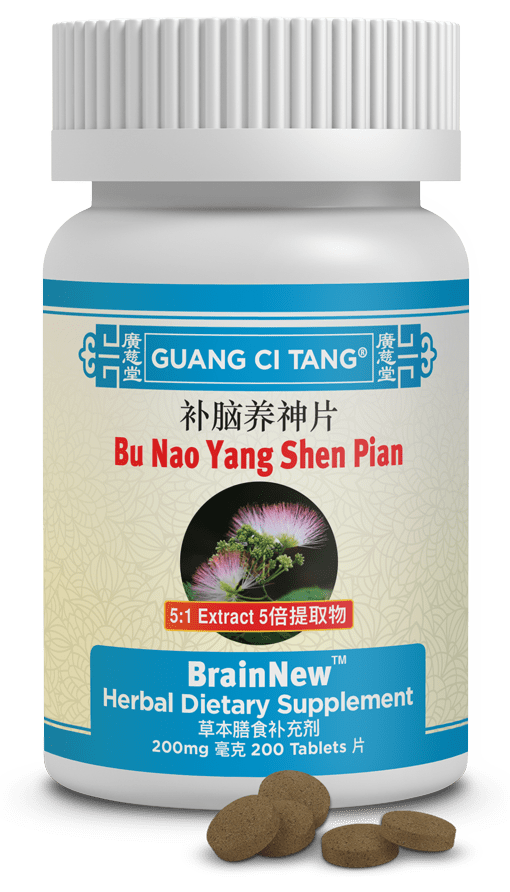
ActiveHerb’s BrainNew™, also known as Bu Nao Yang Shen Pian, is a Chinese herbal formula designed to support healthy brain function from a TCM perspective.
Bu Nao means to tonify or supplement the brain. Yang Shen means to nourish the spirit.
In other words, this is not just a formula for memory and cognition. Instead, it reflects the TCM concept that brain health and Shen support belong together.
BrainNew nourishes the Heart to calm the mind and tonifies the Kidneys to benefit the brain. The formula includes herbs traditionally used to calm the spirit, nourish the Heart and Liver, support the Kidneys, move Blood, transform Phlegm, and open the orifices.
Key Herbs in BrainNew
BrainNew contains several herbs with long histories of use in Nao and Shen support. Together, these herbs support brain health through a multi-pattern strategy, including nourishing, calming, moving, clearing, and overall TCM organ system support.
Suan Zao Ren, or sour jujube seed, is traditionally used to nourish the Heart and Liver and calm the spirit. It is often associated with restful sleep and emotional steadiness.
Yuan Zhi, or Polygala root, is traditionally used to calm the spirit, support communication between the Heart and Kidneys, and help transform Phlegm that may cloud the mind.
Shi Chang Pu, or Acorus rhizome, is commonly associated with opening the orifices, transforming Dampness or Phlegm, and supporting mental clarity.
Dan Shen, or Salvia root, is known for supporting Blood movement in TCM.
Wu Wei Zi, or Schisandra fruit, is traditionally used to astringe, support Essence, calm the spirit, and help preserve the body’s deeper resources.
He Huan Hua, or Albizia flower, is often used to soothe constrained emotions and calm the Shen.
Huang Jing, or Polygonatum, is traditionally used to nourish Qi and Yin.
Dang Gui, or Angelica sinensis, is a classic Blood-nourishing herb.
“Nao” Is The Time To Support Your Brain Health
In TCM, the brain is not merely a filing cabinet for facts. It is affected by the movement of Qi, the state of the Shen, the nourishment of Blood, and the deeper reserves of Essence.
That is why supporting brain health in TCM means supporting the whole system that feeds, calms, clears, and steadies the mind. When those deeper foundations are strong, Nao has a better chance to help us think clearly, remember well, and stay mentally present.
References:
- Liu D, et al. Traditional Chinese medicine as a viable option for managing dementia: a systematic review. Medicine. 2025.
- Yu J, et al. Traditional Chinese medicine’s holistic approach to Alzheimer’s disease. Frontiers in Cellular Neuroscience. 2025.
- A Survey of Traditional Chinese Medicine Treatment for Alzheimer’s Disease. Evidence-Based Complementary and Alternative Medicine. 2014.
Related Posts

About The Author
